
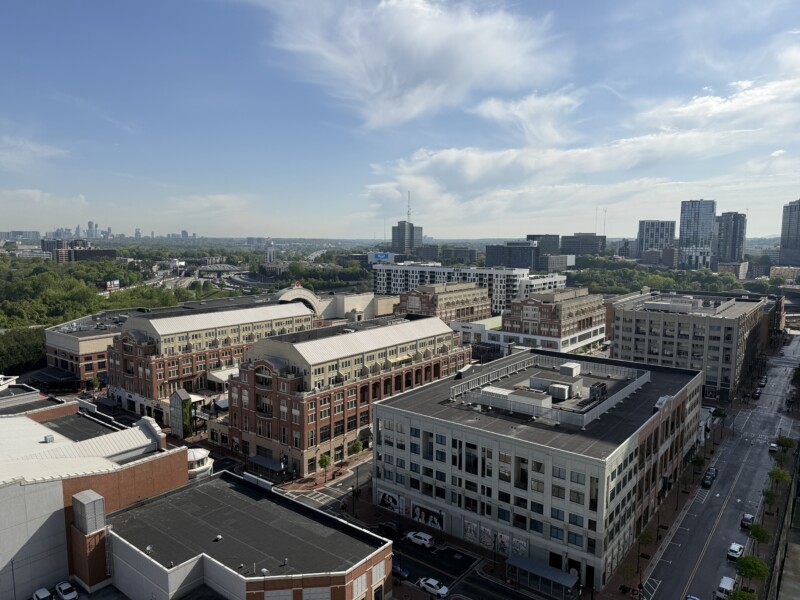
 Atlantic Station is a dynamic mixed‑use district on the northwestern edge of Midtown Atlanta. What began as a former industrial site has been transformed into a walkable, vibrant neighborhood combining residences, retail, offices, and public space.
1. History & Transformation
-
The site was originally home to the Atlantic Steel mill, founded in 1901. Over the decades, steel production expanded and became central to the industrial economy in this part of Atlanta.
-
By the late 20th century, the mill had largely ceased operations, leaving a brownfield site that required environmental remediation.
-
In the mid-1990s, developers conceived of a bold plan to reclaim the site and repurpose it as a mixed-use urban district.
-
Atlantic Station officially opened on October 21, 2005. Over time, the district has undergone ongoing modernization and re-tenanting efforts to refresh its retail, dining, and public spaces.
-
It is widely cited as one of the most significant brownfield redevelopments in the U.S.
2. Location & Boundaries / Connectivity
-
Atlantic Station sits just off 17th Street, adjacent to the Downtown Connector (I‑75/I‑85) and in close proximity to Midtown.
-
It occupies about 138 acres of land.
-
Its master plan accommodates roughly 12.5 million square feet of development (retail, residential, office, etc.).
-
On the east side, it borders the Downtown Connector; on the south, 16th Street NW; to the west, Northside Drive.
-
Because of its central positioning, it acts as a bridge between Midtown, the Westside or West Midtown, and the downtown core.
3. Character & Design / Urban Planning
-
Atlantic Station was designed with New Urbanism principles in mind: walkability, mixed uses, human-scale blocks, and connectivity.
-
The streetscapes are intended to feel like an “open-air mall meets neighborhood” — brick paving, pedestrian-friendly design, storefronts, sidewalks, and smaller blocks.
-
The core (often called Atlantic Green) serves as a “nucleus” for outdoor events, plazas, gatherings and a central gathering point.
-
In 2025 and beyond, new phases (such as the “Forge” in Atlantic Yards) are planned to fill in missing urban edges, densify street life, and continue the architectural dialogue referencing the district’s industrial past (brick, masonry, glass, steel) Urbanize Atlanta
4. Amenities: Retail, Dining, Entertainment & Culture
-
Atlantic Station is more than a mall — it houses dozens of shops, restaurants, cafes, entertainment venues.
-
Some anchor features and draws include:
• IKEA — a major retail draw. -
• Millennium Gate Museum (The Gate / The Arch) — a distinctive landmark and museum exploring Georgia’s history and art.
• A mix of chain and local dining, cafés, boutique shopping, and specialty retailers.
• Outdoor plazas and event programming (concerts, movies in the park, public performances).
• The “Commons” / Atlantic Green — a green space used for gatherings, seating, events. -
In 2025, new commercial development is underway (e.g., The Forge) to bring additional retail, street-level activation, and connectivity. Urbanize Atlanta
5. Parks, Green Space & Walkability
-
Atlantic Station is highly walkable by design.
-
The central “Atlantic Green” (or Commons) serves as a gathering space, lawn, event venue, and visual focal point.
-
The development maintains pedestrian-friendly sidewalks, connections, and human-scale streets.
-
As it continues evolving, infill, additional public realm improvements, and better street edge activation are planned.
6. Office, Commercial & Development Outlook
-
The Atlantic Yards project is already part of the mixed-use component: around 500,000 square feet of office space in two buildings is in place.
-
Future phases (like The Forge) will add new buildings, infill retail, and connect gaps in the street fabric.
-
The redevelopment efforts (e.g. modernization, retenanting) around 2020 aimed to revitalize the tenant mix and refresh the ambiance.
-
Because the area is privately owned / governed (versus city‑controlled streets), certain design rules, private maintenance, and curated tenant selection are part of its character.
7. Transit & Mobility
-
Atlantic Station is served by a free shuttle linking to the Arts Center MARTA station.
-
Because of its adjacency to the Downtown Connector (I‑75/I‑85) and central position, access by car is relatively direct.
-
That said, traffic and parking constraints (especially during events or peak periods) are realities in any dense urban area, so transit, walking, biking, and ride-share options are often preferred by residents and visitors. (You may wish to check current parking & mobility policies.)
-
As Atlantic Station densifies, greater connectivity via pedestrian links, bike lanes, and improved public transit integration are likely to be emphasized in future planning (e.g. via new phases).
-
Why Live in Atlantic Station? / What Makes It Unique
-
-
All-in-one convenience: Shopping, dining, entertainment, work, home — many amenities are right outside your door.
-
Walkability & vibrant street life — you can realistically live day-to-day without needing a car.
-
Redeveloped history — the transformation from steel mill to urban district gives it character and storytelling appeal.
-
Strong central green space / public realm — Atlantic Green, events, plazas help cultivate community.
-
Proximity to Midtown & downtown — easy access to the heart of the city while enjoying a more contained, neighborhood feel.
-
Ongoing growth & investment — new developments, tenant refreshes, and infill projects suggest continuing vitality and potential.
-
Selective, curated environment — because much of it is privately managed, the experience and maintenance tend to be more uniformly controlled.
Condominium Living Options at Atlantic Station
The Atlantic
Art Foundry Condominiums
Element Condominiums
District Lofts
ATLofts